
• Books
    • All E-Books
    • The Natural Soapmaking Book for Beginners
    • Easy Soap Making Book
  • Food
  • Soap Recipes
  • Beauty
  • Home and Garden
    • Holidays
  • Herbs and Essential Oils
  • Homestead Hop
  • Shop
  • Blog
Simple Life MomSimple Life Mom
  • Books
    • All E-Books
    • The Natural Soapmaking Book for Beginners
    • Easy Soap Making Book
  • Food
  • Soap Recipes
  • Beauty
  • Home and Garden
    • Holidays
  • Herbs and Essential Oils
  • Homestead Hop
  • Shop
  • Blog

How to Make Homemade Natural Toothpaste

Posted by Kelly Lip and Mouth Recipes, Natural Beauty 30 comments
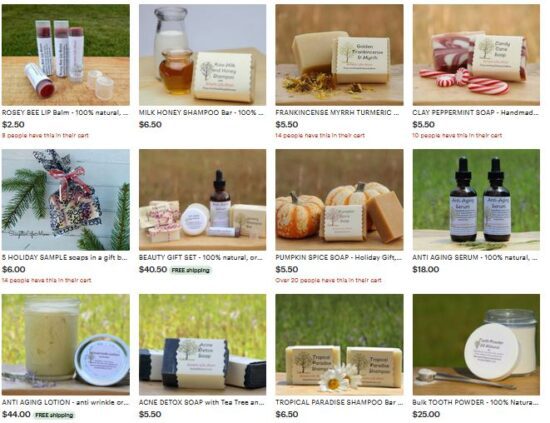
Simple Life Mom Shop - Homemade Organic Skin Care Products
Please Share

A number of you have asked about homemade natural toothpaste over the past few months.  I’m happy to share with you what we use and love. I recently shared multiple ways to remineralize your teeth (click here to read about that) and Oil Pulling. These are great methods, but I understand that many of you are looking for a toothpaste that’s similar to store bought because it’s what you’re used to or because you’re trying to convince your husband and children to give it a try. These 3 options below should fill that need. Use the one that works best for you and your family.

3 Homemade Natural Toothpaste Recipe

I used to use Tom’s of Maine thinking that the ingredients were natural and better, that it was worth the extra cost.  After further investigation, I no longer think there is enough of a difference to justify the cost.  Now, there are better and worse ingredients, but it’s not like one brand is great and the other is horrible.  There’s not that much of a difference.

So, we decided to make our own.  It’s not difficult at all.  It costs very little, and it works.  Win Win!

Coconut is a great oil.  It has very little taste and is full of great minerals like potassium, phosphorus, calcium, magnesium, manganese and selenium.  The oil in this recipe helps to cleanse your mouth and re-mineralize your teeth,

Baking soda whitens and neutralizes the acids that cause dental caries.  Adding essential oils also helps to cleanse and make the toothpaste taste great.

Hydrogen Peroxide creates a chemical reaction in your mouth helping to loosen bacteria and help cleanse.

Bentonite Clay is negatively ionically charged; meaning that it attracts positively charged bacteria and toxins to be rinsed away.

I do not like to use salt, as I see it as too abrasive.  I also do not use glycerin, because there is discussion that glycerin may block your teeth from re-mineralizing.  Until I learn more, I don’t use it.

3 Homemade Natural Toothpaste Recipes

With each of these recipes, add more coconut oil to make it thinner, more baking soda to make it thicker, according to your preference.  I like to make mine thin-ish so I can drizzle it with a spoon over my toothpaste (no contact, keeping it sterile).

1) Coconut Toothpaste

Ingredients:

  • 3 tablespoons coconut oil
  • 3 tablespoons baking soda
  • 10 drops of peppermint, citrus, or cinnamon leaf

Instructions:

  1. Warm coconut oil so that it melts (above 76 degrees F.).
  2. Combine all ingredients in a small dish, or us a small tube like this one.

2) Hydrogen Peroxide Toothpaste

Ingredients:

  • 2 Tablespoons coconut oil
  • 3 Tablespoons baking soda
  • 1 teaspoon hydrogen peroxide
  • 10 drops  peppermint, citrus, or cinnamon leaf

Instructions:

  1. Warm coconut oil so that it melts (above 76 degrees F.).
  2. Combine all ingredients in a small dark dish (to preserve the hydrogen peroxide), or us a small tube like this one.

3) Bentonite Clay Toothpaste

Ingredients:

  • 3 tablespoons coconut oil
  • 3 tablespoons bentonite clay
  • 2 tablespoons filtered water
  • 10 drops peppermint, citrus, or cinnamon leaf

Instructions:

  1. Warm coconut oil so that it melts (above 76 degrees F.).
  2. Combine coconut oil and clay.
  3. Add water slowly until you get the consistency that you want.
  4. Place in a small dish, or us a small tube like this one.
3 Homemade Natural Toothpaste Recipes

I am obviously not a dentist, so do your own research please. Talk to your dentist if you have questions.Save


Please Share
30 comments

About Kelly

Kelly is the author of number one best seller The Natural Soap Making Book for Beginners and Easy Soap Making. She's also written multiple ebooks on herbal remedies and natural bath and body DIYs.Her journey toward better health has inspired her to make things in and around the home from scratch, start a homestead, and become more resourceful when it comes to health and home.She shares her recipes and DIYs here on Simple Life Mom and has a shop where she sells products for those who would rather buy than make (SimpleLifeMom.com/shop).

You also might be interested in

Disinfectant Essential Oil Blends for Cleaning from Simple Life Mom

Time Tested Disinfectant Essential Oil Blends for Cleaning

Jun 11, 2014

Please Share Our skin is the largest organ in our[...]

17 Natural Back to School DIYs and Recipes from Simple Life Mom - Health, Organization, and Real Food Recipes and Ideas

17 Natural Back to School DIYs

Aug 16, 2015

Please Share Whether you home school, private school, or government[...]

Acne Spot Treatment with Essential Oils by Simple Life Mom. Oils to cleanse, heal, and reduce inflammation.

How to Make Acne Spot Treatment with Essential Oils

Mar 2, 2015

Please Share SaveThere is an alternative to treating acne with[...]

30 comments

Leave your reply.
  • Katie
    · Reply

    August 11, 2014 at 10:13 PM

    Looks Great thanks for sharing.

  • Jennifer S.
    · Reply

    August 12, 2014 at 7:38 AM

    I’ve been looking for a simple toothpaste recipe. These look great.

  • Janine
    · Reply

    November 24, 2014 at 4:47 AM

    These recipes sound great, thanks so much. How does one keep toothbrushes clean though as I can imagine coconut oil could make it quite greasy?

    • Kelly
      · Reply

      Author
      November 24, 2014 at 7:27 AM

      We just run ours under hot water when we are done (not really any more than normal) and they stay clean.

  • Elizabeth @Plant Based Bride
    · Reply

    October 24, 2015 at 8:08 PM

    I’m definitely going to try these! I’d much rather make my own than buy the chemical-ladden options at the drugstore. Thank you for sharing these recipes! May I ask which is your favourite?

  • Kelly
    · Reply

    Author
    October 24, 2015 at 8:12 PM

    I keep it simple. I use #1 the most, but we use the others too. The clay recipe helps you to remineralize, so it’s an easy winner too. 🙂

  • Jennifer A
    · Reply

    December 8, 2015 at 12:36 PM

    I use the first recipe and love it, but I should try the clay some time too. I need to remineralize my teeth. But I really do love the coconut oil and baking soda, my teeth have definitely gotten better and whiter using it.

  • Carol L
    · Reply

    June 14, 2017 at 5:58 PM

    I have made the clay toothpaste, and love it! I did add about 2 TBSP of xylitol, though. I can’t STAND the taste of baking soda: it makes me gag, so I added the xylitol to help mask the taste of it, PLUS there is so much online about how GOOD xylitol is for teeth! It made the baking soda fade to the background and I feel that I’m really helping my teeth stay healthy. Thank you for these recipes! This now tastes almost like my fav store bought toothpaste.

  • Satu
    · Reply

    December 28, 2018 at 1:14 PM

    Thank you for these recipes. It is difficult to find a toothpaste from shop that does not have Sodium lauryl sulfate. I am sensitive to this substance. What do you think about adding carbon to toothpaste?

    • Kelly
      · Reply

      Author
      December 29, 2018 at 3:01 PM

      You can add activated charcoal, definitely! It’s a great cleanser and whitener.

  • Terri Sidell
    · Reply

    April 7, 2020 at 10:01 PM

    Thanks!! I was looking for a natural toothpaste.

  • Monica
    · Reply

    May 23, 2025 at 12:03 AM

    I am just starting this journey to making homemade household items. I have a lot of anxiety as it is, and I worry about shelf life. Do you know the shelf life of the 3 recipes? Thanks in advance.

    • Kelly
      · Reply

      Author
      May 24, 2025 at 12:31 PM

      Great question. Since the first recipe is oils, it will last a lot longer than the second two. The oil recipe will last 3-4 months while staying fresh, depending on how sanitary you keep it, but the water recipes can go bad after just a week or two. I would add the peroxide or water to what you will use over the next few days.

  • Colleen
    · Reply

    June 10, 2025 at 6:44 AM

    Hello thank you for sharing your knowledge. When I make the bentonite I follow directions and steps exactly but when I add the water, it balls up and it then seems to coconut oil separates. Any thoughts or suggestions?

    • Kelly
      · Reply

      Author
      June 17, 2025 at 7:52 AM

      I haven’t had it ball up. It is a different texture with oil than with water though, for sure. You can leave it as a powder. Dip your toothbrush in and use as is. Oil pull with coconut oil after.

  • Judy
    · Reply

    August 22, 2025 at 6:04 AM

    How often can you use your toothpaste?

    • Kelly
      · Reply

      Author
      August 26, 2025 at 10:42 AM

      We’ve been using it daily for years. Of course, you need to brush gently when using baking soda.

  • Winter
    · Reply

    November 2, 2025 at 11:59 AM

    I was looking for a new natural recipe for my family and my 2 year old grandchild when they are visiting. Is it safe for a 2 year old if they swallow some of it? Does using metal on bentonite clay make the product less effective? Thanks so much for your recipes!

    • Kelly
      · Reply

      Author
      November 2, 2025 at 12:07 PM

      I can only tell you what I did with my kids. It depends on the maturity of the child. My children at that age were trained to spit and did a really good job. If they swallow a little bit it’s fine. So much better than if they were to swallow even a tiny bit of regular store bought.
      Bentonite clay bonds to free positive particles. These are usually toxins and bacteria we don’t want in our mouth. So using a wooden spoon makes sure you aren’t altering the chemistry before it gets to your mouth. If possible use a wooden spoon.

  • Laura Trujillo
    · Reply

    September 20, 2026 at 10:03 AM

    For the flavoring, are you using essential oils or extracts? Sorry for the simple minded question, but I’m just starting this journey and not sure if essential oils are edible. 😉
    Thank you!

    • Kelly
      · Reply

      Author
      September 20, 2026 at 10:35 AM

      Essential oils are not the same thing as extracts. Extracts are herbs (leaves, roots, bark, flowers) that have had their properties extracted into another substance (usually alcohol). There’s different terms for methods and depending on what’s used but to keep it simple that’s an extract. An essential oil is when the oil of a plant is taken and then through CO2 or steam distillation the oil within the oil is taken out. It’s a precious part of the plant. But no other oils or alcohols are added. So think of essential oils as super concentrated parts of a plant extracted purely.
      Yes many are edible but we use them in small amounts when touching the lining of the mouth, throat, or stomach. Many companies use them in baking and have for many years. Though now those are usually lab made.
      In a toothpaste, using clove or peppermint works great without irritation and can help with bacterial growth and odor.
      Long answer, but hope that helps.

  • Laura Trujillo
    · Reply

    September 21, 2026 at 10:21 AM

    Thank you, Kelly!
    I made and used the #1 recipe with a citrus essential oil I had on hand and it works great! I’m excited to find some peppermint and cinnamon leaf oils soon for variety!

    • Kelly
      · Reply

      Author
      September 21, 2026 at 10:28 AM

      That’s great, Laura! I’m glad you’ve enjoyed using it. My favorite is still peppermint. I used lavender once because I love the scent. Oh my. Lavender tastes horrible haha

  • Nancy
    · Reply

    September 27, 2026 at 2:59 PM

    When making hydrogen peroxide toothpaste is the peroxide food grade? Tyia

    • Kelly
      · Reply

      Author
      September 28, 2026 at 3:03 PM

      Yes, to avoid stabilizers you can use food grade, but it is a higher percentage (usually 35% instead of 3-5%) so you can use less or dilute it more.

Leave a reply

We'd love to hear your thoughts and ideas!
Cancel reply

Recipe Rating


Join the Simple Life Mom Community

And get a FREE Bath and Body Recipe E-Book:

Thank you!

Check your email and add me to your address list so messages don't go to spam. 

You'll have a link to the free e-book in the email.

Kelly

SHOP

Join Us and Get New DIYs and Recipes Subscribe

Categories

  • Soap Making
  • Bath and Beauty
  • Health and Essential Oils
  • Home and Garden
  • Homestead Blog Hop
  • Real Food Recipes

Books

  • Natural Soap Making Book for Beginners
  • Easy Soap Making
  • Natural Soap Making How-To and Recipe Book
  • Make it Yourself: Bath & Home DIY for Self Sustainability
  • Natural Beauty from Head to Toe
  • Herbs & Essential Oils in Soap Making

SHOP

Other Resources

  • Mountain Rose Herbs
  • Herbal Academy
  • Amazon
  • Revelation Health

© 2026 Simple Life Mom - All Rights Reserved

  • Disclaimers/Policies for Simple Life Mom

Press Enter to search · Esc to close