

I’ve added to this article to give you more details and resources for how to plan a garden. Planning for Spring planting is one of the things I love about winter. There can be a lot to think about, even for someone with a small garden or kitchen garden. This seed planning guide is put together to help you organize those thoughts so that you are ready to plant when it is time, whether that be starting seeds indoors or direct planting into the ground in the Spring.
First, ask yourself these questions:
- What grew well last year?
- What do I want to plant again?
- What do I NOT want to plant again, at least not now :-).
- What grew poorly and how can I fix that?
How to Plan a Garden with Frost Dates and Hardiness Zones
Making the list of what to plant is a big step in starting a garden. The number one in my opinion is location and soil preparation, but you can’t have a garden without plants. Thinking about what types of plants you would like to grow before the last frost hits your area is a great use of your time.
You can find out when your last frost date is on the Farmer’s Almanac page: Last Frost Date. This is typically the date that you can plant outside without worrying about frost killing your baby plants.
You should also know your planting zone. You can find that here: Planting Hardiness Zone.
Knowing both your planting zone and last frost date will be very helpful in creating a successful garden.
Some plants are hardy (potatoes, strawberries, broccoli, cauliflower, and spinach), but plants won’t even germinate until the temperature is right. Don’t put heat loving plants outside too early. You won’t get that jump on the season because they won’t start growing until it’s warmer. Plant those heat loving veggies indoors first, while getting a jump outdoors with more hardy plants like the ones listed above.
Analyzing What Worked and What Didn’t
What do you want to grow this year? Vegetables? Fruits? Just herbs? Think about what you like to eat and use in your cooking.
If you had a garden last year and are reading this because you want to make some changes, what worked last year and what didn’t?
Did you have problems with disease? Do you need more aeration in your soil, better soil all together?
It’s good to learn from what went wrong. For example, my tomatoes got the same blight last year as what caused the horrible Potato Famine in Ireland in the 1800s. It’s living dormant in the soil, so I know I can’t plant tomatoes there for a few years. I’m planting tomatoes in a different garden this year, as well as in pots around the house. I’m hoping to have a good harvest even if some plants may be infected again.
Make a Good and Bad list.
Remember that plants need to be rotated. If you take the same nutrients from soil over and over again, the plants will do worse and worse because those nutrients will be depleted. Even if you have plants listed in the Good column of your list, you will need to rotate them or possibly replenish soil around those that you can’t move like perennial.
If you have things listed in the Bad column, what are possible solutions? Try to identify what went wrong so you can make those adjustments for success this year.
How to Plan a Garden with Seed Planning
I love to plan out what I’m going to plant each year. Actually, I love to plant as many perennials (trees, herbs, etc) that will grow back on their own. But, I also like to imagine a wonderful yield that will fill my shelves and freezer at the end of the year, with as little cost as possible.
Not planning can lead to low yield and more expense. After all, if you are slow in planning you may wish you had more plants and end up going to a local hardware store to buy expensive plants that just introduce disease into your garden.
Use the list of good and bad that you made above and use the seed planning guide below to start listing what you’d like to grow. Take note whether you’ll need to start those plants indoors or if you can directly sow the seeds outside.
Can you plant them early, or do you need to wait until after the last frost date?
Use the Seed Planning Guide to help.
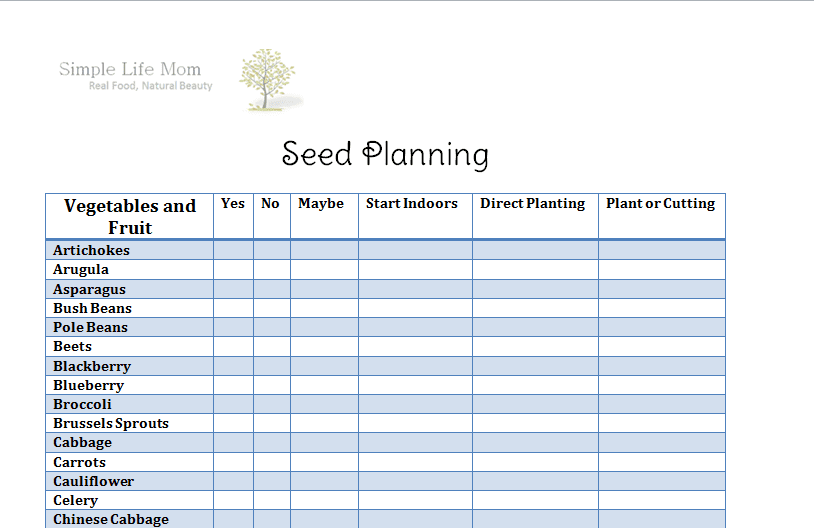
It has a list of vegetables, fruits, and herbs, and space for ones you want to add so you that you can take notes. You can download it for your own editing and printing.
Check yes, no, or maybe to veggies you want or don’t want. You can note whether you need to get them going ASAP indoors, or plant them directly into the soil when it warms up. You can also make note of whether you want to buy a plant or cutting, or get one from of a friend.
Let me know if you have any questions or if there’s something else in this area I may be able to help with.



8 comments
Leave your reply.