
• Books
    • All E-Books
    • The Natural Soapmaking Book for Beginners
    • Easy Soap Making Book
  • Food
  • Soap Recipes
  • Beauty
  • Home and Garden
    • Holidays
  • Herbs and Essential Oils
  • Homestead Hop
  • Shop
  • Blog
Simple Life MomSimple Life Mom
  • Books
    • All E-Books
    • The Natural Soapmaking Book for Beginners
    • Easy Soap Making Book
  • Food
  • Soap Recipes
  • Beauty
  • Home and Garden
    • Holidays
  • Herbs and Essential Oils
  • Homestead Hop
  • Shop
  • Blog

6 Luxurious Handmade Salt Soap Recipes

Posted by Kelly Handmade Soap, Homemade Soap Recipes 73 comments
Simple Life Mom Shop - Homemade Organic Skin Care Products
Please Share

Handmade Salt Soap is a fun, exfoliating, hard soap bar that is great for the skin and body. I’ve included 6 Handmade Salt Soap Recipes so you can choose which one fits your needs. (Note that salt soaps will not dry out your skin! See 8 Reasons Salt Soap Bars are Fabulous for the Skin for the science behind it.)

If you are new to soap making, you can learn how to make soap in this 7 Easy Steps to Homemade Soap for Beginners tutorial.  It will walk you through the ingredients and tools needed and help you learn more about the safety of handling lye and essential oils. Making salt soap is slightly different, so I will walk you through the ins and outs of it below, but already having a general understanding of soap making is helpful.

To learn more about WHY you should choose a salt soap: 8 Reasons Salt Soap Bars are Fabulous for the Skin

BEFORE you try these recipe you must learn about How to make them.

6 Handmade Salt Soap Recipes from Simple Life Mom

6 Handmade Salt Soap Recipes

Remember:

  1. You can change the amount of salt. For a more typical body bar with a highly lather and less exfoliating, try 50% of salt compared to the amount of oils. Want a true salt bar, increase the salt to 100% of the amount of oils (32oz oils in the recipe, use 32oz salt).
  2. These set up fast. Add any coloring and fragrance to your batch at trace before adding the salt.
  3. It’s best to use a segmented mold, but if you only have a slab mold, then remove it from the mold after 3-4 hours or it will be too hard to cut and may crumble. You can use the oven method by heating the oven to its lowest temperature and turning it off when you place the soap in it. Check after 3-4 hours. This is not necessary if your salt content is very low or you have a divided soap mold.

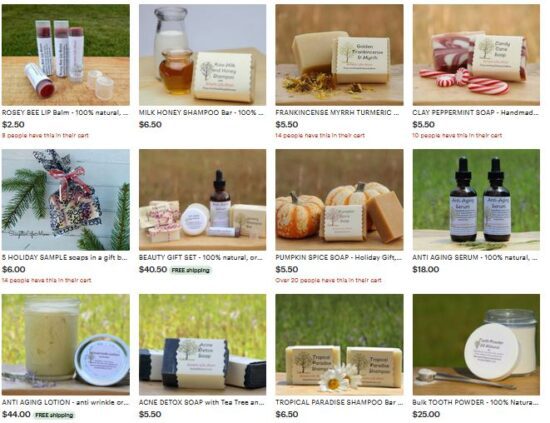
BUY THESE IN MY STORE!

Recipe #1 – 2lb, 80% coconut, 80% salt, 20% superfat

Ingredients:

  • 16-oz coconut oil
  • 3-oz olive oil
  • 1-oz castor oil
  • 7.6-oz water
  • 2.8-oz lye
  • 0.5 to 1-oz essential oils
  • 16-oz salt

Directions:

  1. Combine oils, melt, and then cool to 90-100 degrees F.
  2. Add lye to water out in an open aired location and cool to 90-100 degrees F.
  3. Add lye water to oils and mix with hand mixer on and off until it comes to light trace.
  4. Add essential oils and salt and combine.
  5. Pour into mold and let set for 3-4 hours before cutting.
  6. For more information read 7 Easy Steps to Homemade Soap for Beginners and How to Make Natural Salt Soap.


Recipe #2 – 2 lb, 70% coconut, 100% salt, 20% superfat

Ingredients:

  • 14-oz coconut oil
  • 4-oz avocado oil
  • 1-oz castor oil
  • 1-oz shea butter
  • 7.6-oz goat milk (or some combination of water and milk)
  • 2.7-oz lye
  • 0.5  to 1-oz essential oils
  • 20-oz salt

Directions:

  1. Combine oils, melt, and then cool to 90-100 degrees F.
  2. Add lye to water out in an open aired location and cool to 90-100 degrees F.
  3. Add lye water to oils and mix with hand mixer on and off until it comes to light trace.
  4. Add essential oils and salt and combine.
  5. Pour into mold and let set for 3-4 hours before cutting.
  6. For more information read 7 Easy Steps to Homemade Soap for Beginners and How to Make Natural Salt Soap

Recipe #3 – 3 lb, 90% coconut, 100% salt, 20% superfat

Ingredients:

  • 27-oz coconut oil
  • 2-oz olive oil
  • 1-oz castor oil
  • 11.4-oz goat milk (or some combination of water and milk)
  • 4.3-oz lye
  • 1-oz essential oils
  • 30-oz salt

Directions:

  1. Combine oils, melt, and then cool to 90-100 degrees F.
  2. Add lye to water out in an open aired location and cool to 90-100 degrees F.
  3. Add lye water to oils and mix with hand mixer on and off until it comes to light trace.
  4. Add essential oils and salt and combine.
  5. Pour into mold and let set for 3-4 hours before cutting.
  6. For more information read 7 Easy Steps to Homemade Soap for Beginners and How to Make Natural Salt Soap

Recipe #4 – 3 lb, 50% coconut, 50% salt, 15% superfat

If you don’t have a source for good tallow, you can try Here. 

Ingredients:

  • 20-oz coconut oil
  • 10-oz tallow
  • 7-oz olive oil
  • 3-oz sweet almond oil
  • 15-oz water
  • 5.5-oz lye
  • 1-oz essential oils
  • 30-oz salt

Directions:

  1. Combine oils, melt, and then cool to 90-100 degrees F.
  2. Add lye to water out in an open aired location and cool to 90-100 degrees F.
  3. Add lye water to oils and mix with hand mixer on and off until it comes to light trace.
  4. Add essential oils and salt and combine.
  5. Pour into mold and let set for 3-4 hours before cutting.
  6. For more information read 7 Easy Steps to Homemade Soap for Beginners and How to Make Natural Salt Soap

6 Handmade Salt Soap Recipes from Simple Life Mom

Recipe #5 – 8 lb, 80% coconut, 100% salt, 20% superfat

Ingredients:

  • 67 ounces coconut oil
  • 2 ounces avocado oil
  • 6 ounces olive oil
  • 2 ounecs castor oil
  • 2 ounces shea butter
  • 3 ounces sweet almond oil
  • 31 ounces aloe vera water
  • 11.4 ounces lye
  • 3 ounces essential oils
  • 82 ounces salt

Directions:

  1. Combine oils, melt, and then cool to 90-100 degrees F.
  2. Add lye to water out in an open aired location and cool to 90-100 degrees F.
  3. Add lye water to oils and mix with hand mixer on and off until it comes to light trace.
  4. Add essential oils and salt and combine.
  5. Pour into mold and let set for 3-4 hours before cutting.
  6. For more information read 7 Easy Steps to Homemade Soap for Beginners and How to Make Natural Salt Soap

Recipe #6 – 8 lb, 80% coconut+Palm oil, 100% salt, 20% superfat

Ingredients:

  • 34-oz coconut oil
  • 33-oz palm oil
  • 8-oz olive oil
  • 2-oz castor oil
  • 2-oz shea butter
  • 3-oz sweet almond oil
  • 31-oz water
  • 10-oz lye
  • 3-oz essential oils
  • 82-oz salt

Directions:

  1. Combine oils, melt, and then cool to 90-100 degrees F.
  2. Add lye to water out in an open aired location and cool to 90-100 degrees F.
  3. Add lye water to oils and mix with hand mixer on and off until it comes to light trace.
  4. Add essential oils and salt and combine.
  5. Pour into mold and let set for 3-4 hours before cutting.
  6. For more information read 7 Easy Steps to Homemade Soap for Beginners and How to Make Natural Salt Soap

Please Share
73 comments

About Kelly

Kelly is the author of number one best seller The Natural Soap Making Book for Beginners and Easy Soap Making. She's also written multiple ebooks on herbal remedies and natural bath and body DIYs.Her journey toward better health has inspired her to make things in and around the home from scratch, start a homestead, and become more resourceful when it comes to health and home.She shares her recipes and DIYs here on Simple Life Mom and has a shop where she sells products for those who would rather buy than make (SimpleLifeMom.com/shop).

You also might be interested in

How to Design Your Own Soap Recipe from Simple Life Mom

How to Design Your Own Soap Recipe

Nov 15, 2020

Please Share Being able to design your own soap recipe[...]

17 Natural Back to School DIYs and Recipes from Simple Life Mom - Health, Organization, and Real Food Recipes and Ideas

17 Natural Back to School DIYs

Aug 16, 2015

Please Share Whether you home school, private school, or government[...]

3 laundry soap recipes from Simple Life Mom

3 Easy to Make Laundry Soap Recipes

Jun 14, 2023

Please Share I’ve put together 3 Laundry Soap Recipes.  I[...]

73 comments

Leave your reply.
  • Hadia
    · Reply

    January 14, 2017 at 5:44 AM

    How amazing, Kelly! I thought the process of making soaps is far more difficult than that! It looks like so muh fun! I can’t wait to try them out myself!

    • Kelly
      · Reply

      Author
      January 14, 2017 at 8:50 PM

      It’s like baking cake. You just need to follow the directions. 🙂

  • Sandra Shaffer
    · Reply

    January 14, 2017 at 1:29 PM

    Spa-like soup in your own bathroom! Sure like the sound of that and the savings when you make your own products!

    • Kelly
      · Reply

      Author
      January 14, 2017 at 8:53 PM

      Very true. And you can’t beat the ingredients.

  • Elaine Matthews
    · Reply

    January 15, 2017 at 10:16 AM

    I’ve never made homemade soaps before, but with your recipes I bet I could!! So many wonderful options too!! Thanks for sharing!!

    • Kelly
      · Reply

      Author
      January 15, 2017 at 1:25 PM

      You’re welcome Elaine. Thanks for stopping by.

  • Dianne
    · Reply

    January 16, 2017 at 8:35 AM

    Hello Kelly
    Does this have to cure for the 4-6 weeks as well or can it be used immediately?

    • Kelly
      · Reply

      Author
      January 16, 2017 at 9:48 AM

      Traditionally, soaps cures for that amount of time for hardness. It’s also come to mean, traditionally, that the lye is still processing during this time. That’s not true. Scientifically speaking, the saponification of any soap processing is finished after about 48 hours. These bars get hard before you can even pull them out so yes, even though someone will yell at me, ill say you can use them after a few days. Give them a week to be safe.

  • Belen
    · Reply

    January 18, 2017 at 6:18 AM

    Hi Kelly. How can the lye be left out? How would the soap recipe need to be amended? Thanks

    • Kelly
      · Reply

      Author
      January 18, 2017 at 8:17 AM

      Hi Belen,
      It’s impossible to make soap without lye. Even the melt and pour bases have lye, they’ve just already done that part for you. Sorry.

      • Jennifer
        · Reply

        May 10, 2021 at 3:01 PM

        What percentage superfat do you use?

        • Kelly
          · Reply

          Author
          May 11, 2021 at 9:41 AM

          Each recipe says how much is used. It will vary.

  • Phil Johnson
    · Reply

    February 20, 2017 at 8:39 AM

    I love the salt soaps. When I was little, yea I know me and rocks, I use to help my Grandmother melt the left over soap bars to make one bar and not waste any. How can I do this with the salt soaps?

    • Kelly
      · Reply

      Author
      February 20, 2017 at 8:51 AM

      You want to hot process soap pieces or shavings and make them into a salt soap bar?
      These soaps are made with more coconut oil and higher superfatting (leftover oils). These two items make it non drying and still bubbly,etc. You’re not necessarily going to have that if you just take scrap soap.
      But, if you want to experiment and go for it. …
      As you’re melting very slowly in a saucepan or slowcooker it will become bubbly and change, looking mire like mashed potatoes. At this point add enough salt to create the desired consistency. The exact amount will vary based on the amount of scrap soap you have and the percentage of salt you want. It will be thick. Scoop into a mold amd let cool before use.

  • Sharon Surman
    · Reply

    March 5, 2017 at 6:27 AM

    Can you use coconut milk in place of the goat milk? And what should the ratio of water to milk be?

    • Kelly
      · Reply

      Author
      March 5, 2017 at 11:40 AM

      Yes you can. I don’t like to sub more than 50% of the water with milk, because you’re more likely to run into problems like your soap over heating, etc. But you can if you want to. Just go slow when adding lye and don’t incubate with towels later, just cover with a lid and let cure for the 24 hours.

  • Jessica
    · Reply

    November 9, 2017 at 7:23 PM

    This is just what I was looking for. One question though, can I do this with the crockpot method? I have fallen behind for my homemade Xmas presents and don’t have enough time for a proper cure. Thanks for the help and the recipes

    • Kelly
      · Reply

      Author
      November 9, 2017 at 7:25 PM

      I’ve never tried, but I don’t see why not.

  • Jessica
    · Reply

    November 9, 2017 at 7:25 PM

    This is just what I was looking for. A couple of questions though, can I do this with the crockpot method? I have fallen behind for my homemade Xmas presents and don’t have enough time for a proper cure. Also, does it matter which kind of salt? Thanks for the help and the recipes

  • Stephany
    · Reply

    November 12, 2017 at 6:14 AM

    Hi Kelly. Nice work! I haven’t attempted making soap yet, guess am having cold feet, but would like to attempt the coconut oil soap. I would like a recipe to make 1 Ib of 100% coconut oil soap with 20-30% super fat. Thanks in advance.

    • Kelly
      · Reply

      Author
      November 12, 2017 at 8:59 AM

      Hi Stephany. Go to soapcalc.net, lye calculator, then change to ounces and change the superfat amount. Add coconut oil and calculate and it will tell you how much water and lye to use. It’ll make a very hard bar that oddly dissappears quickly as you use it.

    • :Helen
      · Reply

      March 7, 2021 at 6:34 PM

      Thanks so much for this. Please can I use the soap that I scraped.?
      About 500grams, how much salt do I add to it after melting it?
      Can we use table salt, Himalayan salt, sea salt or sugar? Thank you.

      • Kelly
        · Reply

        Author
        March 22, 2021 at 10:42 PM

        I never have, but I don’t see why you can’t add salt to melt and pour or hand-milled soap. I’d use about 285 grams to 500 grams of soap and add a tablespoon of oil since you cannot control the superfat content.

  • Marie
    · Reply

    November 24, 2017 at 1:40 PM

    I am so happy for your article, I made my first soap last night coffee & milk, it came out nice but I don’t have all the nice techniques that are out there yet. I will try to make carrots and cucumbers tonight and I might just make yogurt and raspberry too. there will be for Christmas present for friends and family.

    thanks please keep the articles coming.

  • Debra
    · Reply

    March 6, 2018 at 10:55 AM

    Hi there, what type of salt do you recommend and where do you buy from? I think I had read once not to use dead salt because it would be mushy, but I have no idea what is dead salt and what kinds of salt I should use instead. Thank you for your help! I’m so excited to find your website! I’ve been wanting to specifically learn about shampoo bars and salt bars and have found so much wonderful info from your site. I also just bought your PDF on soap making.

    • Kelly
      · Reply

      Author
      March 6, 2018 at 2:27 PM

      Hi Debra. You can use any Himalayan rock salt, or even table salt if that’s what you have on hand. Dead sea salt has a lot of minerals and more than anything It will make the soap “weep” because of the moisture draw from it.

  • Evelyn
    · Reply

    April 21, 2018 at 10:31 AM

    Hi, I love your recipes. However, am only familiar with SI units. Is the oz of oil, Fluid ounce, equivalent to 29.5735ml? (as per google).
    Are you using fluid ounce in your recipes above?
    And for the salt? Is it 1 ounce to 28.3495 grammes (as per google)?
    Thank you

    • Kelly
      · Reply

      Author
      April 21, 2018 at 12:16 PM

      They are dry ounces, not fluid ounces. Yes, 1 ounce is about 28 grams.

  • Cheryl
    · Reply

    October 25, 2018 at 7:49 AM

    Hello Kelly~
    I made a badge last night of your Recipe #4 – 3 lb and I have a few questions.
    Your recipe reads 50% Coconut oil, 50% Salt, 15% Superfat and I followed the recipe.
    I am a little bit concern about the 30 – oz of salt (sea salt) that you list on your recipe and that I used. Is it suppose to look salty? I did the CPOP method (170 degrees for 30 minutes) with your recipe. Will that hurt my batch?

    Thank you!
    I am a little anxious about the look. It had a little bit of sweat even though it is now gone and a could literally see the salt.

    • Kelly
      · Reply

      Author
      October 25, 2018 at 8:09 AM

      Made by the normal cp method it should have a smooth texture, but not be as creamy looking as a non-salt soap. By heating for thirty minutes and stirring you moved it along the process and changed the texture of the outside. It should be totally fine though. Just remember to remove it from the mold after a few hours instead of the usual 24, or they may crumble when cut or removed.

      • Cheryl
        · Reply

        October 25, 2018 at 10:23 AM

        Thank you for your speedy reply. I would have hated to trash the batch.

  • Suzanne
    · Reply

    November 20, 2018 at 9:09 PM

    I would like to try one of your salt soaps but I don’t have any castor oil on hand, is there another oil that I can substitute for it?

    • Kelly
      · Reply

      Author
      December 6, 2018 at 6:07 PM

      There really isn’t a good substitute for castor oil. You can use more of another oil to make up for the loss in volume and run it through a lye calculator to make sure your numbers are still all right.

  • Suzanne
    · Reply

    March 17, 2019 at 8:39 AM

    I made one of the salt soap recipes yesterday and after cutting it I realized that I didn’t get the salt completely mixed in! Do I need to redo the batch? will the salty parts crumble? They seem like they would now but what about when they are cured?
    Thanks! I hate to waste this batch!

    • Kelly
      · Reply

      Author
      March 22, 2019 at 7:53 AM

      The salt parts that aren’t mixed in as well will crumble. If they are only small bits it should be fine. If you have golf ball sized chunks then you can either discard that bar or hot process.

  • Sue
    · Reply

    June 6, 2019 at 3:29 AM

    Hi, can you advise how long these salt bars need to cure for. Is it the standard 4-6 weeks?

    • Kelly
      · Reply

      Author
      June 11, 2019 at 9:24 AM

      Yes

  • Cindy
    · Reply

    August 2, 2019 at 12:20 PM

    I am curious. Some other recipes require measuring by weight. Are your recipes measured by weight or volume?
    Thanks

    • Kelly
      · Reply

      Author
      August 5, 2019 at 6:08 PM

      Soap should always be by weight – ounces or grams.

  • Kimberly C McNeill
    · Reply

    August 31, 2019 at 10:35 AM

    Hi Kelly, I want to make soap using Epsom salt. Can the salt in your recipe’s be Epsom salt. I really like number 3. I want to use raw goat milk.

    • Kelly
      · Reply

      Author
      September 6, 2019 at 2:23 PM

      Epsom salt is mainly magnesium and the high mineral content can cause the soap to sweat profusely You can try adding some Epsom salt and the rest a table or Himalayan salt.

  • Patrícia
    · Reply

    September 20, 2019 at 9:53 PM

    Hi
    When you state the weight of each batch (for example, 2 lbs or 5 lbs) does that including the salt?
    For the 2 lbs batch, it seems to me that I will end up with way more than two pounds once the salt is added…
    I’m just trying to calculate if this will fit in my 2 lbs mold.
    Thanks!

    • Kelly
      · Reply

      Author
      September 20, 2019 at 10:10 PM

      It does give you much bigger bars. Most 2lb soap molds are big enough to hold 3lbs though so it should be fine. I use the same wooden molds, they’re just a lot more full.

  • Bharati
    · Reply

    September 26, 2019 at 1:03 AM

    Hi,
    Loved your recipes. Looking forward to trying out salt bars. Thank you so much. You made it so easy for us.

    Warmest regards
    Bharati

  • Julie
    · Reply

    December 17, 2019 at 2:07 PM

    Hi I.really like your salt soap recipes. They work very well. I am curious about the mold you used to make the bars in the photo. Was it a slab mold? I like the size and I would like to buy that mold.
    Thank you

    • Kelly
      · Reply

      Author
      December 20, 2019 at 7:53 PM

      I bought a 36 bar wooden mold with plastic insert dividers from bramble berry

  • Rita
    · Reply

    June 23, 2020 at 12:14 PM

    Hi! I made recipe #4 and it was “weepy”, meaning that water repeatedly beaded up on the bars after they were set out. I’ve never had that happen before! Did I mess something up?

    • Kelly
      · Reply

      Author
      June 23, 2020 at 12:35 PM

      Sometimes that can happen with salt bars depending on the humidity. That can also happen in soap making if you get fragrance oils or cheap essential oils.

  • qikiikasari
    · Reply

    December 8, 2020 at 8:26 AM

    Hi there, I’m new to soap making. Really glad I’ve found your recipes. Can I substitute goat milk with cow milk? Many thanks.

    • Kelly
      · Reply

      Author
      December 11, 2020 at 5:59 PM

      Yes you can, 1:1

  • Tarra Millard
    · Reply

    January 14, 2021 at 3:23 PM

    I was thinking of making a magnesium soap. I have magnesium oil (that I made) and wanted to know if I should add it during emulsion or if I can use it directly for my water portion of the lye solution? Any recommendations?

    • Kelly
      · Reply

      Author
      January 18, 2021 at 8:17 PM

      It depends on how much oil you want to add. If you want to use larger amounts then you’ll need to account for it in your recipe. What oil did you use to make the magnesium oil? if you used magnesium flakes in water, then add that in place of some of the water in your recipe or replace completely.

  • Kelly
    · Reply

    March 9, 2021 at 10:49 AM

    Hi, on your “don’t forget #2” it has some weird dating text. Is that intentional?

    • Kelly
      · Reply

      Author
      March 12, 2021 at 9:06 AM

      No, I got hacked. Thank you for letting me know!!

  • Teresa F.
    · Reply

    March 19, 2021 at 2:07 AM

    I’m a little bit confused .. I would really love to use goat’s milk in the sea salt soap…. is it ok to use ALL goat’s milk with no water??

  • Christina Logan
    · Reply

    April 5, 2021 at 5:57 PM

    I always love your recipes because they are natural and I am working my way through changing everything to natural- even with colouring soap. I have been thinking about trying a salt bar and this is amazing. Thank you. You are very kind to share your recipes. Cant wait to try a salt bar now.

  • Natacha
    · Reply

    April 6, 2021 at 5:21 PM

    Hi Kelly,
    I’ve just bought your book and reading through the salt bar recipes and it says to use table salt and not sea salt. What’s the difference in using one and not the other?
    Lovely book ?
    Many thanks
    Natacha

    • Kelly
      · Reply

      Author
      April 7, 2021 at 3:48 PM

      Sea salt or dead sea salt has a very high mineral content which calls for a higher coconut content or superfat content, depending on the recipe.

  • Linda Pontell
    · Reply

    May 21, 2021 at 3:04 PM

    Hi Kelly,
    how do i replicate your recipe in my calculator? I dont get the same amount of water and sodium hydroxide. What % of water to oils do you use, or what is your lye concentration, or what is your water to lye ratio? I was looking at recipe # 2 and could nto get the same amounts of lye and water as you did. thank you! Linda

    • Kelly
      · Reply

      Author
      May 23, 2021 at 5:46 PM

      The superfat content (lye discount) is mentioned at the beginning of each recipe.
      I ran it through the lye calculator again just to be sure and it’s correct. I’m not sure, but possibly the lye calculator you’re using has slightly different calculations. Water amount 38%

  • Rosie Drewniany
    · Reply

    April 13, 2024 at 9:56 AM

    I made the salt bar as directed in recipe #1, however, after sitting overnight, it is still soft in the individual silicone molds. What may have gone wrong?

    • Kelly
      · Reply

      Author
      April 16, 2024 at 10:45 AM

      Are you sure about all of the measurements? If temps were cold then it can take a little longer, but you should be fine within 24 hours. Let me know how it went.

  • Colleen
    · Reply

    August 9, 2024 at 7:39 PM

    I weighed everything on my scale to make salt soap. Now I’m wondering if I was supposed to not do that with the salt on the scale and use a dry measurement instead. Which is the right way?

    • Kelly
      · Reply

      Author
      August 9, 2024 at 7:51 PM

      Weigh them in ounces, not fluid ounces. But there won’t be a huge difference for the recipe. I’m sure it’s fine.

  • Laurel
    · Reply

    December 29, 2024 at 8:14 AM

    Hi Kelly,

    I render my own lard and often use it in soap. Would you happen to have a recipe for salt soap using primarily lard for the fat?

    Thanks for your help,
    Laurel

    • Kelly
      · Reply

      Author
      December 29, 2024 at 1:01 PM

      You can definitely use lard instead of coconut oil, but the amount of salt stops the lather from most oils except coconut oil. So your bar won’t lather as much but will definitely be fine.

  • Renee
    · Reply

    January 18, 2025 at 4:53 PM

    I’m new to soap making, and love the idea of making a salt bar. I didn’t see any mention of using clay, or powders for adding color. I have several clays, and some really nice natural dyes from India-Indigo, Madder, Alkanet, Himalayan Rhubarb. Would they be suitable to use in a salt bar, or would it change the composition too much? Love your website!!

    • Kelly
      · Reply

      Author
      January 18, 2025 at 10:44 PM

      Yes, I love using clays in salt soaps as well. They work well. No change from how you add them to other types of bars.

  • Lia
    · Reply

    February 17, 2025 at 7:01 AM

    Hi Kelly!
    I have done many of your soaps and love them, but never this salt soap.
    Wondering if it should be regular table salt that contains iodine? Thank you please!

    • Kelly
      · Reply

      February 17, 2025 at 8:48 AM

      Hi Lia, yes you can use table salt with iodine if that’s what you have on hand. It will make a great salt soap.

Leave a reply

We'd love to hear your thoughts and ideas!
Cancel reply

Recipe Rating


Join the Simple Life Mom Community

And get a FREE Bath and Body Recipe E-Book:

Thank you!

Check your email and add me to your address list so messages don't go to spam. 

You'll have a link to the free e-book in the email.

Kelly

SHOP

Join Us and Get New DIYs and Recipes Subscribe

Categories

  • Soap Making
  • Bath and Beauty
  • Health and Essential Oils
  • Home and Garden
  • Homestead Blog Hop
  • Real Food Recipes

Books

  • Natural Soap Making Book for Beginners
  • Easy Soap Making
  • Natural Soap Making How-To and Recipe Book
  • Make it Yourself: Bath & Home DIY for Self Sustainability
  • Natural Beauty from Head to Toe
  • Herbs & Essential Oils in Soap Making

SHOP

Other Resources

  • Mountain Rose Herbs
  • Herbal Academy
  • Amazon
  • Revelation Health

© 2026 Simple Life Mom - All Rights Reserved

  • Disclaimers/Policies for Simple Life Mom

Press Enter to search · Esc to close