
• Books
    • All E-Books
    • The Natural Soapmaking Book for Beginners
    • Easy Soap Making Book
  • Food
  • Soap Recipes
  • Beauty
  • Home and Garden
    • Holidays
  • Herbs and Essential Oils
  • Homestead Hop
  • Shop
  • Blog
Simple Life MomSimple Life Mom
  • Books
    • All E-Books
    • The Natural Soapmaking Book for Beginners
    • Easy Soap Making Book
  • Food
  • Soap Recipes
  • Beauty
  • Home and Garden
    • Holidays
  • Herbs and Essential Oils
  • Homestead Hop
  • Shop
  • Blog

Easy Sourdough Starter Recipe

Posted by Kelly Bread, Real Food 44 comments
Please Share

A sourdough starter is something that families have kept in their homes for hundreds of years until recently.

Sourdough bread is a bread that is made from yeasts that are found in the air (wild yeast), instead of adding active dry yeast or baker’s yeast to make bread.  It is a method that has been used for a long time and creates a wonderful bread with only a hint of sourness (depending on how long it ferments). In fact, it’s been found that many people with gluten sensitivities have less problems with true sourdough bread.

True sourdough bread is made with a full sourdough starter. These days, many companies will call something sourdough when they’ve added a sourdough element, but they will still add a yeast and non-fermented dough. If you are eating sourdough bread in hopes that it will sit better on your stomach than other gluten breads, then keep this in mind.
How to Make a Sourdough Starter and keep it fed by Simple Life Mom

Sourdough tastes amazing and has many great benefits.

Benefits:

  1. If you learn how to bake bread this way, you can always make bread as long as you have flour and water.  A little more self-reliance.
  2. Starters can last a life time once they are established and cared for.
  3. As long as you learn the method and have patience to walk away and let it set (which I had a hard time with at first), there is very little work to do at all.
  4. The long fermentation process allows time for the protein (gluten) to be broken down into amino acids.  This makes the bread much easier on the digestive system (whether you are gluten sensitive or not).
  5. And, if we’re going to get technical, the fermentation process activates phytase which dissolves phytates (just as if the seed was getting ready to germinate), thus freeing up minerals like phosphorous, zinc, calcium, magnesium, iron and copper for your digestion.

So, there’s some amazing benefits.  What about the difficulty of making it? 

When I first tried to make a sourdough starter, I didn’t really follow instructions, and I made a lot of mistakes.  I ended up with great tasting bread that was so dense I was worried about people breaking their teeth (Yet they still ate it).  

At one point, I also had a starter that smelled strongly of ammonia. 

Since then, I have learned the how’s and why’s and it has really become a habit that I don’t really think about how to do any more.  

I now want to pass along this information and hopefully answer any questions you may have so that you can make this incredibly healthy bread at home too.

The Details

Step One: Make Your Starter

1.  Slice a potato into quarters and boil it for 15 minutes in 4 cups of water.  Eat the potato (or whatever you want to do with it) and reserve the water.  You can skip this part if you like, but I think the added starch and vitamins from the potato water does the starter good.

2.  Once the water has cooled a bit, use 3 cups of it to make the sourdough starter. Using a wooden spoon (metals can hurt the yeast), stir in the 2 tablespoons of honey and the 3 cups of flour.

Some water will have evaporated during the boiling.  Ideally, you want equal amount in weight of flour and water.  A good rule of thumb is to add 1/2 to 2/3 cup water to every 1 cup of flour (flour is lighter so you will add more). 

Your final product should be very sticky dough.  Not sticky enough that it looks like pancake batter, but not as thick as if you were baking a regular loaf of bread. 

3. Whip some air into it by stirring vigorously for a minute or two.

Step Two: Let Your Starter Ferment

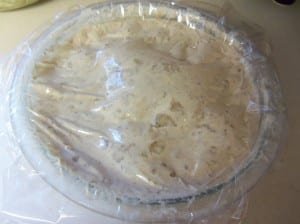
You want air to get to the dough, but you don’t want it to dry out.

Options:

  • Cover your bowl with a lid, but leave the lid cracked open.
  • OR cover with plastic wrap and then poke holes in it. 
  • OR place a clean dish towel or basket over the lid.

Leave the starter on your counter top for 2-3 days, feeding every 12 to 24 hours.

The more frequently you feed it, the faster it will ferment. But you are putting it on a schedule, so you need to try to stick with whatever you choose. So, on a 12-hour schedule you may make this at 10am. Before you go to bed that night, feed it, mixing well, and loosely cover it again.

Feed with:

  • 1/2 cup flour
  • 1/4 cup water
How to Make a Sourdough Starter and keep it fed by Simple Life Mom

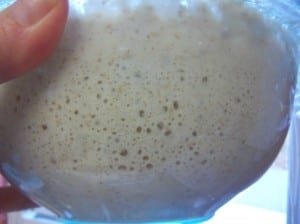
Repeat every 12 or 24 hours (depending on the schedule you chose at the beginning) until you see it really rising and bubbling inside and on top.  Remember, the point is to get enough yeast from the air permeated throughout the dough so that you have a fluffy dough.  Too little feeding and the yeast will run out of gluten to digest, and an ammonia smell will begin to develop. 

If you miss a feeding and the ammonia smell is slight, just feed it and keep going.  If it’s too strong, you have to start over. Your bread will smell like ammonia.
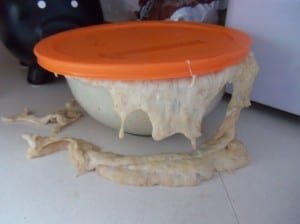
How to Make a Sourdough Starter and keep it fed by Simple Life Mom

Make sure it has enough space to grow!

This is your starter.

After 2-3 days it will be full of natural and healthy yeast. You will keep this in your refrigerator, taking a portion out when you want to make a loaf of bread. You will feed it once a week to keep it healthy. You can do this if you make bread once a week, otherwise mark it on your calendar to make sure it’s fed once a week and stays healthy so that you can still make bread with it whenever you’re ready.

Sample Schedule:

I make my starter at 6pm Sunday night.  I feed it at 7am or so when I get up Monday morning.  I feed it again at 6-7pm Monday night, and again Tuesday 6-7am and Tuesday night 6pm. Now it is bubbly and ready to go in the fridge.

I will feed the starter in the fridge at least once a week (or when I make bread once a week).

I want to make bread now, so I will feed the starter Wednesday morning and then let it set for 6-8 hours on the countertop lightly covered. You will learn the optimal rise. This will vary depending on the temperature of your house.  You don’t want it to rise too much and fall, because then the yeast has begun to run out of food.  You want to get it when it is super active and well fed.  After waiting the 6-8 hours, I will remove what I need for my recipe, feed the starter one more time and put it in the fridge.

If I am not going to make bread right away, I will feed the starter Wednesday morning and put it straight into the fridge for a week and not let it sit out for the 6-8 hours.

I’ve taken the starter out and fed it, removed what I need for my recipe and returned my starter to the fridge late at night, gotten up in the morning and had a great dough ready to make into a loaf the next morning. This is in winter though. It can raise a lot faster in hot summer months, depending on the temperature of your house.
How to Make a Sourdough Starter and keep it fed by Simple Life Mom

Step Three: Regular Feeding (remember to use a wooden spoon and glass dish)

Some people have kept their starter fed for 30 years (so I’m told).  I’ve had mine for a year, so I guess I can see that happening. The thing is not to neglect it.  It only takes a few moments a week to maintain it, so mark it on your calendars so you don’t forget.

Baking Throughout the Week

If you want to make sourdough bread a few times a week, then:

  1. remove it from the refrigerator and wait 1 hour for it to warm up a bit
  2. feed the starter to activate it and wait 6-8 hours
  3. Remove what you need for your bread recipe.
  4. Feed the starter and return it to the fridge.

Baking Once a Week

Follow steps for baking throughout the week.

Baking Less Than Once a Week

If you do not make sourdough in a week, remove your starter from the fridge, discard all but 1/2 cup, feed it, let it set for a few hours at room temperature, then return it to the fridge.
How to Make a Sourdough Starter and keep it fed by Simple Life Mom

Sourdough Starter Recipe

You can buy your own starter on great sites like culturesforhealth.com, but it’s really unnecessary.  I have found this to be the best method when making my own starter:

How to Make a Sourdough Starter and keep it fed by Simple Life Mom
Pin Recipe Print Recipe

Sourdough Starter Recipe

Fermenting a sourdough starter from scratch.
Prep Time15 minutes mins
Course: Ingredient
Keyword: bread, sourdough
Author: Kelly

Equipment

  • 1 small saucepan
  • 1 measuring cups
  • 1 stirring spoon , preferably wooden
  • 1 large glass bowl
  • 1 cheese cloth , or other cloth

Ingredients

  • 3 cups filtered water
  • 1 potato , quartered
  • 2 cups unbleached all purpose flour , or flour of your choice
  • 2 tablespoons honey

Feeding

  • ½ cup unbleached all purpose flour
  • ¼ cup filtered water

Instructions

  • Pour 3-4 cups of water into a saucepan and then add a potato and bring the water to a boil. Cook for 15 minutes.
    3 cups filtered water, 1 potato
  • Cool the potato water until it is lukewarm and then transfer 2 cups of water to a glass bowl. Add the honey and flour, stirring until a wet dough is formed.
    2 cups unbleached all purpose flour, 2 tablespoons honey
  • Cover with a cloth and let it sit on the countertop at room temperature for 2-3 days, feeding with 1/2 cup of flour and 1/4 cup of water every 12 hours.
    1/2 cup unbleached all purpose flour, 1/4 cup filtered water

For Sourdough Recipes, click here: Sourdough Recipes

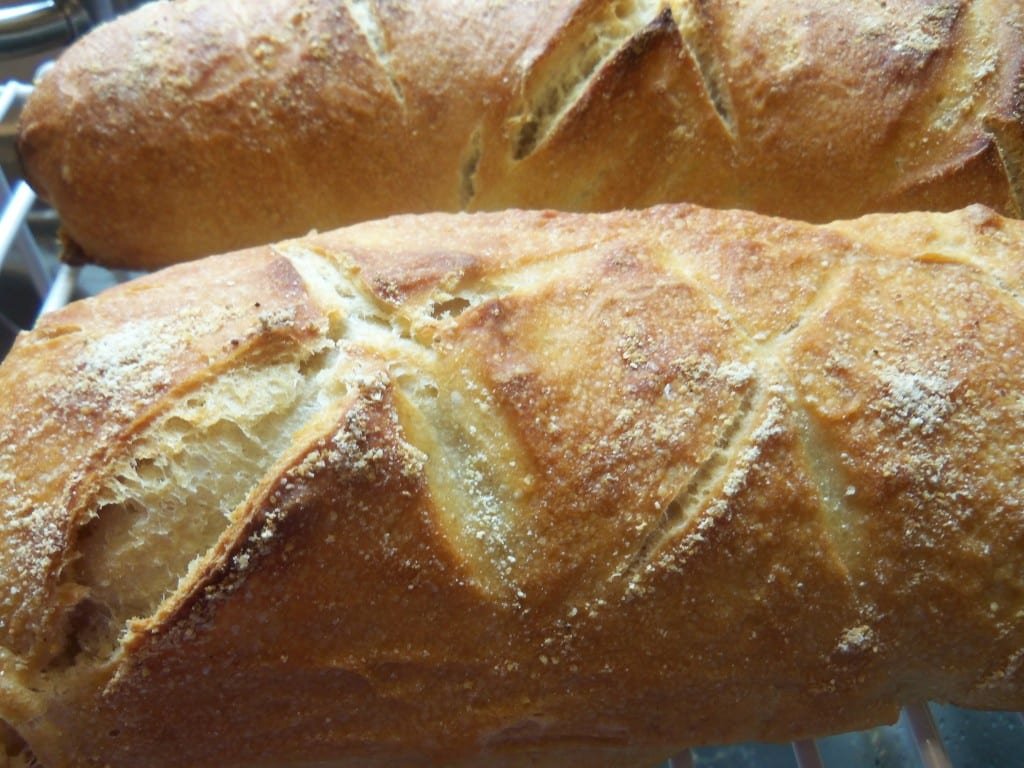
The above link will give you the recipe that uses your starter to make AMAZING rustic sourdough bread.

Enjoy!

Save


Please Share
44 comments

About Kelly

Kelly is the author of number one best seller The Natural Soap Making Book for Beginners and Easy Soap Making. She's also written multiple ebooks on herbal remedies and natural bath and body DIYs. Her journey toward better health has inspired her to make things in and around the home from scratch, start a homestead, and become more resourceful when it comes to health and home. She shares her recipes and DIYs here on Simple Life Mom and has a shop where she sells products for those who would rather buy than make (SimpleLifeMom.com/shop).

You also might be interested in

Homemade Saueraut

How to Make Homemade Sauerkraut Recipe

Mar 5, 2014

Please Share Homemade Sauerkraut is a wonderful way to receive[...]

Sourdough Recipes of Bread and Pancakes from Simple Life Mom

How to Make Sourdough Bread

Feb 19, 2014

Please Share There are so many reasons that I love[...]

The Only 2 Bread Recipes You'll Ever Need from Simple Life Mom

The Only Two Bread Recipes You Need

Feb 5, 2014

Please Share These are my Top 2 Bread Recipes.  They[...]

44 comments

Leave your reply.
  • isleofazure
    · Reply

    February 17, 2014 at 5:18 PM

    Girl you are amazing 🙂
    Smiles!!!

    • Simple Life Mom
      · Reply

      Author
      February 17, 2014 at 5:32 PM

      Thank you!

      • isleofazure
        · Reply

        February 17, 2014 at 5:35 PM

        Anytime girl, you truly are a Chef Genius!!!!
        Smiles!!!

        • Simple Life Mom
          · Reply

          Author
          February 17, 2014 at 5:42 PM

          Ha ha, I’m just not afraid to make massive mistakes 😉

          • isleofazure

            February 17, 2014 at 5:44 PM

            You never do, you just create masterpieces 🙂 your family must be beaming with pride 🙂
            Smiles!!!

  • Laura Rittenhouse
    · Reply

    February 17, 2014 at 5:50 PM

    I confess that I have a sourdough starter but I still add yeast when making bread. The starter adds the taste and the yeast means baking the bread is much easier – it rises well and quickly. Also, if my starter goes a bit flat I don’t have to wait a day to wake it up. It’s my compromise, one I’m not overly proud of but am pragmatic enough to accept as what I’ll probably do for the foreseeable future. I really admire you for planning so well to make to a schedule that works for your starter.

    • Simple Life Mom
      · Reply

      Author
      February 17, 2014 at 6:05 PM

      Hey, you do what works for you and your family. 🙂 I make one of my other favorite yeast breads while I wait for the sourdough if I haven’t gotten it out in time.

  • Grow. Cook. Eat. Share.
    · Reply

    February 18, 2014 at 12:54 AM

    This is something my hubby has been trying to convince me to do, and you make it look perfectly simple! Thanks 🙂

    • Simple Life Mom
      · Reply

      Author
      February 18, 2014 at 8:40 AM

      Wonderful. Please let me know if you have any questions. Once you figure it out, it really is simple.

  • Tracy Fredrychowski
    · Reply

    February 21, 2014 at 10:05 AM

    I have wanting to try sourdough…I love the way you have outlined every step day-by-day. Thank you so much I am going to go start some right now!

    • Simple Life Mom
      · Reply

      Author
      February 21, 2014 at 3:25 PM

      Yea! Let me know if you have any questions.

      • john
        · Reply

        April 3, 2018 at 11:38 AM

        Can i leave the wooden spoon right in the jar I’m making the dough in?

        • Kelly
          · Reply

          Author
          April 9, 2018 at 8:01 AM

          It’s not good for the spoon and will eventually destroy it, but it shouldn’t hurt the dough.

  • Lyn
    · Reply

    February 26, 2014 at 1:57 PM

    About what size bowl should I use?

    • Simple Life Mom
      · Reply

      Author
      February 26, 2014 at 2:09 PM

      My 1.5 quart bowl is what overflowed. You can use a 2q or 2.5q (2.4 liter) bowl to be safe. After you get your starter going, you can probably use the 1.5 quart in your fridge.

      • Lyn
        · Reply

        February 26, 2014 at 2:24 PM

        Thank you! I love quick responses! Yay. Off to make some Sourdough Starter while the babies are asleep!

  • CTY
    · Reply

    March 1, 2014 at 1:55 AM

    Just wondering, do you use potato water every time you feed it?

    • Simple Life Mom
      · Reply

      Author
      March 1, 2014 at 7:18 AM

      No, just to get it started.

      • Sadie Hawkins
        · Reply

        July 4, 2023 at 3:35 AM

        Hi ya, want to make sour dough for the first time and your recipe seems really easy to get going on. My one question is, and I know it sounds daft but the recipe doesn’t say, is when I feed my starter with flour and water do I stir this in or leave on top. I don’t want to deactivate my recipe by the stirring movement if not called foe.
        Many thanks
        Sadie x

        • Kelly
          · Reply

          Author
          July 4, 2023 at 8:02 AM

          That’s a great question. Stir it in well.

  • mjm58
    · Reply

    March 1, 2014 at 12:42 PM

    I was wondering if this can be made with gluten free flour also. I have read the recipe and it sounds like the mix uses up the gluten and I wouldn’t have a problem eating the bread made from sourdough. and thank you for going in detail about the starter. I miss my bread.

    • Simple Life Mom
      · Reply

      Author
      March 1, 2014 at 5:26 PM

      It depends on how sensitive to gluten you are. Some people can eat sourdough, some can’t. Gluten free sourdough takes a little more effort. You need to feed it more; 3-4 hours instead of 12-24. It needs to be fed more in the fridge (3-4 days), doesn’t need to be increased, but is put into a loaf pan to rise overnight. Here’s a link for more:
      http://www.culturesforhealth.com/art-of-gluten-free-sourdough-baking

  • simplitaly
    · Reply

    April 1, 2014 at 1:53 AM

    Thank you for the inspiration! 🙂

  • Carmen
    · Reply

    October 29, 2014 at 11:28 PM

    Hello and thank you again!

    I thought about passing by to tell you that my sourdough is doing great and getting even better with the time <3

    It even survived our 10 days away-from-home-holliday last summer! 🙂

    http://simplitaly.wordpress.com/2014/10/29/paine-3/

    • Kelly
      · Reply

      Author
      October 30, 2014 at 9:09 AM

      That’s great Carmen! Mine’s still chugging along in my fridge too…which reminds me, I need to feed it 🙂

  • Jamie @ Medium Sized Family
    · Reply

    April 27, 2016 at 8:16 AM

    I used to use sourdough starter. I really miss it. When we get out of this busy season, I’m going to get back into it! It really doesn’t even take that much time.

  • Sandra M. Morris
    · Reply

    May 11, 2016 at 9:01 PM

    Thanks for sharing at Our Homestead Blog Hop!
    I am going to try this. I was just telling my husband I wanted to start making sourdough bread. Perfect timing.
    Thanks!

  • Marcelle
    · Reply

    October 9, 2018 at 3:20 AM

    I am unable to subscribe to your newsletter. It says “Oops something went wrong, Please try again.” I have tried on IE and Chrome and used 2 different email addresses.

    • Kelly
      · Reply

      Author
      October 9, 2018 at 8:58 AM

      Usually that means there’s a typo, space, something odd that’s making it thing that it’s not a real email address. I can add your email manually myself.

  • Yoshy
    · Reply

    April 3, 2020 at 10:05 AM

    It’s really the time to start making sourdough, while i can’t going anywhere because of the covid 19. Thank you for the detail tutorial ????, will start day 1 tomorrow!

    • Kelly
      · Reply

      Author
      April 7, 2020 at 4:45 PM

      Let us know how it goes.

      • Judy
        · Reply

        May 7, 2020 at 4:15 PM

        I have made all types of bread for years but have had a problem with the wild yeast in recent years. My question is do you discard any started in the beginning stage, I have reread several times so if I have skipped this please excuse me. Just trying to clarify I keep feeding twice in a 24 hour period for the 3 days? Then you can make bread and feed remaining starter moving to refrigerator after a couple of hours?

        • Kelly
          · Reply

          Author
          May 12, 2020 at 9:55 PM

          I never discard the beginning stages. I just start very small and keep adding and it builds wild yeast as it grows to a size that you can take from to make your first loaf. I do think subsequent loaves are better so maybe that’s why some discard. But I like to keep things simple so it works well for me.

  • Curious
    · Reply

    April 3, 2020 at 4:06 PM

    Can you use all-purpose flour to feed the starter culture?

    • Kelly
      · Reply

      Author
      April 7, 2020 at 4:41 PM

      Yes you can.

  • Christina
    · Reply

    April 13, 2020 at 12:29 PM

    Hi! I love how detailed this is!
    I’m really new to making a sour dough starter. Everywhere that I’ve read, people discard some starter everyday ( in the beginning) and feed after they discard that amount Until it’s “active”
    From what I understand you just feed and not discard in the starting process ? Is that right?
    Thank you so much

    • Kelly
      · Reply

      Author
      April 13, 2020 at 4:26 PM

      I just start small and keep feeding. No discarding. By the time it’s built up you can use most of it to make bread, reserving the “mother” for replenishing and making your next batch.

  • Candice
    · Reply

    November 4, 2021 at 3:34 PM

    I just started my sourdough starter 4 hours ago. I am rereading through the recipe now and realized I did equal part water and flour (2 cups each). Did I already mess this up before even getting a proper go at it?

    • Kelly
      · Reply

      Author
      November 8, 2021 at 6:39 PM

      No, you can always add at different times. The mother can be very forgiving 🙂

  • Debbie
    · Reply

    November 18, 2024 at 11:31 AM

    Thank you for the sour dough starter and bread recipes.Thank you for your schedule,that helps a lot. I’ll definitely give it a try. I did the potato flake recipe for years but excited about making it this way.

    • Kelly
      · Reply

      Author
      November 18, 2024 at 11:39 AM

      I hope you enjoy the process! Yes, the schedule was the hardest thing for me to get my head around when I started, but then it became second nature. Enjoy!

Leave a Reply

We'd love to hear your thoughts and ideas!
Cancel Reply

Recipe Rating


Join the Simple Life Mom Community

And get a FREE Bath and Body Recipe E-Book:

Thank you!

Check your email and add me to your address list so messages don't go to spam. 

You'll have a link to the free e-book in the email.

Kelly

SHOP

Join Us and Get New DIYs and Recipes Subscribe

Categories

  • Soap Making
  • Bath and Beauty
  • Health and Essential Oils
  • Home and Garden
  • Homestead Blog Hop
  • Real Food Recipes

Books

  • Natural Soap Making Book for Beginners
  • Easy Soap Making
  • Natural Soap Making How-To and Recipe Book
  • Make it Yourself: Bath & Home DIY for Self Sustainability
  • Natural Beauty from Head to Toe
  • Herbs & Essential Oils in Soap Making

SHOP

Other Resources

  • Mountain Rose Herbs
  • Herbal Academy
  • Amazon
  • Revelation Health

© 2026 Simple Life Mom - All Rights Reserved

  • Disclaimers/Policies for Simple Life Mom

Press Enter to search · Esc to close